




In the home services industry—whether you are manufacturing, installing, and servicing industrial ground lifts, or managing residential repair and maintenance crews—efficiency isn’t just a metric. It’s your entire baseline profit margin.
Yet, day after day, dozens of service companies across the United States fall victim to a silent, creeping operational expense: the unnecessary truck roll.
Every time a service vehicle rolls out of your depot with two technicians, a full tank of fuel, and a bed full of inventory, it costs your business hundreds of dollars. If that truck rolls out only to find the customer isn’t home, the parts aren’t in stock, or the wrong technician was dispatched for a highly specialized job, that money is gone forever.
What’s worse? The solution isn't a new piece of expensive software. If you are already running Salesforce, you are likely sitting on the exact tools you need right now to eliminate this waste entirely. You just aren't utilizing them.
The Reality of the Empty Windshield
When an operation relies on manual scheduling or rigid dispatching, a domino effect occurs:
- Inventory Blindness: Technicians arrive at a job site only to realize the specific valve, seal, or replacement part needed for a ground-footing repair is back at the warehouse.
- Scheduling Friction: Customer appointments are booked over the phone based on simple calendar availability, completely detached from live technician locations or optimal driving routes.
- Burnout and Turnover: Technicians spend more time fighting traffic than fixing assets, wearing down your team and driving up fuel expenses.
This isn’t just a scheduling headache; it is a customer experience disaster. When a homeowner or business manager takes half a day off to wait for a technician who arrives without the right tools, corporate trust erodes instantly.
FIGURE 1: AUTOMATED REQUEST TO FIELD DISPATCH LIFECYCLE
01
Inbound Case
Call or case captures asset & problem automatically.
02
AI Triage
System maps needed parts & specific certifications.
03
Smart Match
Matches route geography & live van stock perfectly.
04
Dispatched
Technician is routed with zero-waste execution.
You Already Own the Antidote
Many mid-to-large-scale home service organizations across the US invested in Salesforce years ago. They use it as a glorified digital Rolodex—tracking customer contacts, basic account history, and closed sales.
Meanwhile, powerful, native engines like Salesforce Field Service sit completely dormant within their existing ecosystem.
By properly activating and configuring these tools, your scheduling transitions from a reactive guessing game to an automated, predictive machine.
- 1. Smart Inventory Alerts Instead of guessing what's in the van, your field operations can run on smart inventory tracking. The system knows the parts required for standard maintenance routines and cross-checks them against the technician’s mobile inventory in real time. If a part runs low, automated, proactive alerts prompt warehouse replenishment long before a truck leaves the yard.
- 2. Intelligent, AI-Driven Dispatching Instead of simply assigning the next ticket to the closest technician, modern field systems look at the big picture. They evaluate technical certifications (ensuring a complex lift repair goes to a certified specialist), current traffic patterns, service window urgency, and vehicle inventory simultaneously. The result? The system doesn’t just book an appointment; it dynamically routes your entire fleet to avoid overlapping territories, slashing fuel costs and preventing zero-value truck rolls.
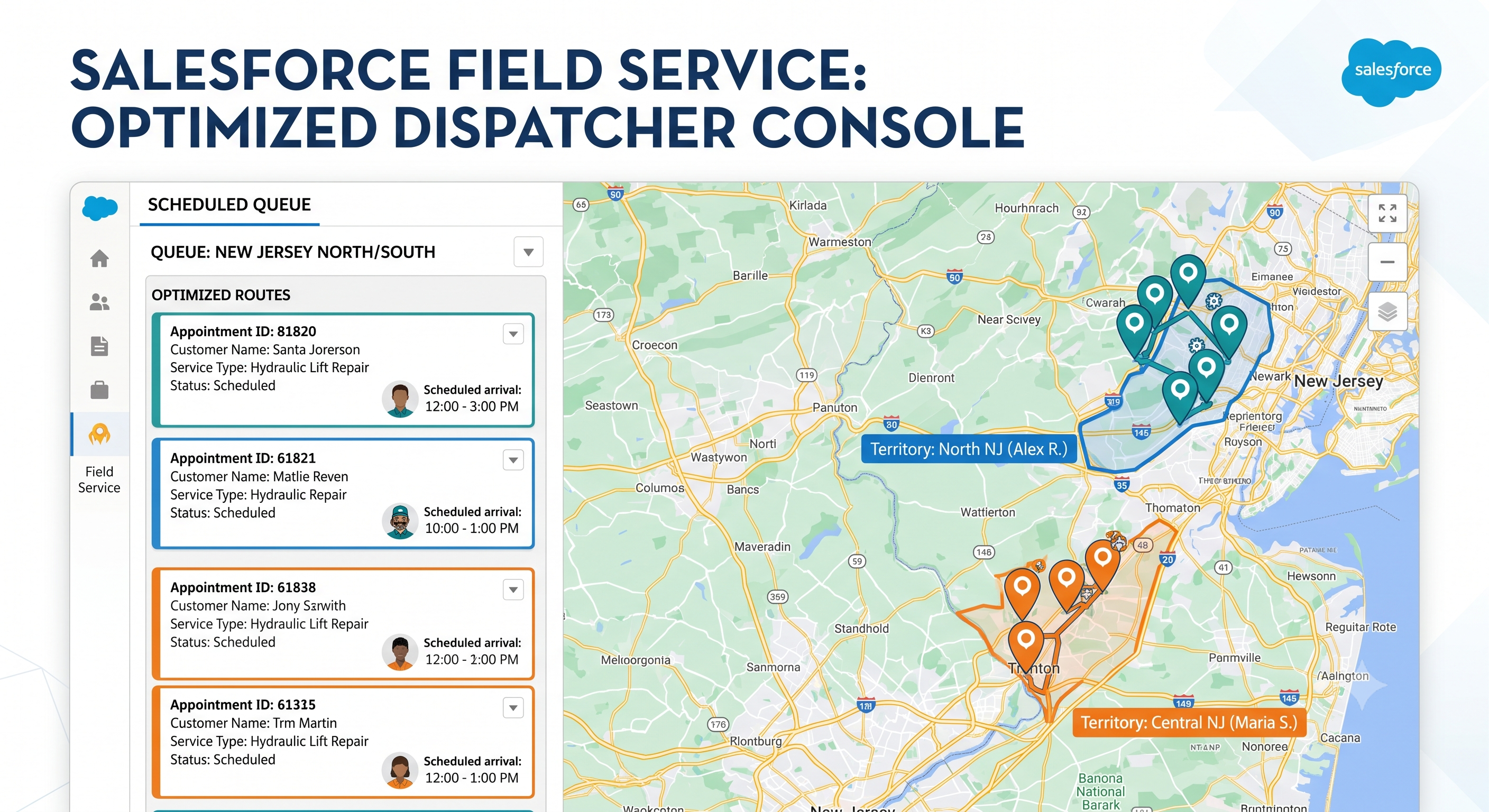
FIGURE 2: SALESFORCE FIELD SERVICE VIEW - CLUSTERED APPOINTMENTS (NEW JERSEY REGION)
Empowering the Field: Handheld Efficiency
A smart backend dispatch console is only half the battle; real efficiency is won or lost right at the doorstep. A critical gap in traditional home service models is the disconnect between what happens onsite and what is recorded in the office.
By putting the power of Salesforce directly onto your technicians' handheld mobile devices, you bridge that gap instantly:
- Live Handheld Inventory Management: Technicians can check, consume, and transfer parts right from their phones, giving the warehouse live visibility into exact stock levels on every truck.
- Transparent Installation & Service Charges: No more waiting for paper invoices or dealing with manual billing errors. Technicians calculate installation fees, labor hours, and additional service charges directly on-screen for complete transparency.
- Instant Sign-off & Job Closure: The moment the work is completed, customers can review the service summary and provide a digital signature directly on the handheld screen. This updates the central CRM immediately, accelerating your billing cycles from weeks to seconds.
The 20-Hour Pivot
Many operational leaders hesitate to fix these issues because they anticipate a multi-month, incredibly painful software implementation process. They assume it will require re-training the entire office and spending six figures on consultative fees.
The reality is far less intimidating. Because your organization is already built on the Salesforce architecture, you don't need a total system overhaul. You need surgical optimization.
With roughly 20 hours of targeted engineering and setup effort, a dedicated development team can align your live field operations with Salesforce Field Service. Within less than a single workweek, your dispatchers can move from chaotic spreadsheet juggling to a unified, automated smart-scheduling dashboard.
Stop paying for premium software licenses while relying on manual, analog workflows. Your field team deserves to operate with precision, and your balance sheet deserves to keep the profits currently being burned on the highway.
Optimize Your Fleet’s Efficiency Today
Let’s turn your underutilized software into your most profitable asset. At iOPTIME PVT LTD, our dedicated team specializes in fast, high-impact Salesforce Field Service implementations designed explicitly for home services and specialized equipment operations across the United States.